The flat faces west-northwest, which means that between May and July the setting sun finds a gap between two neighbouring blocks and sends a direct beam through my living room window. The beam arrives at approximately six o'clock, though I have not measured it with sufficient precision to claim an exact minute. It is close enough to six that I think of it as six.
The beam is warm and rectangular and moves at a speed you can watch — not fast, but perceptible. It enters through the left side of the window, crosses the sofa, and exits through the right wall over the course of about twenty minutes. During those twenty minutes the living room is two rooms: the bright half and the dim half, divided by a line of light sharp enough to draw with a ruler.
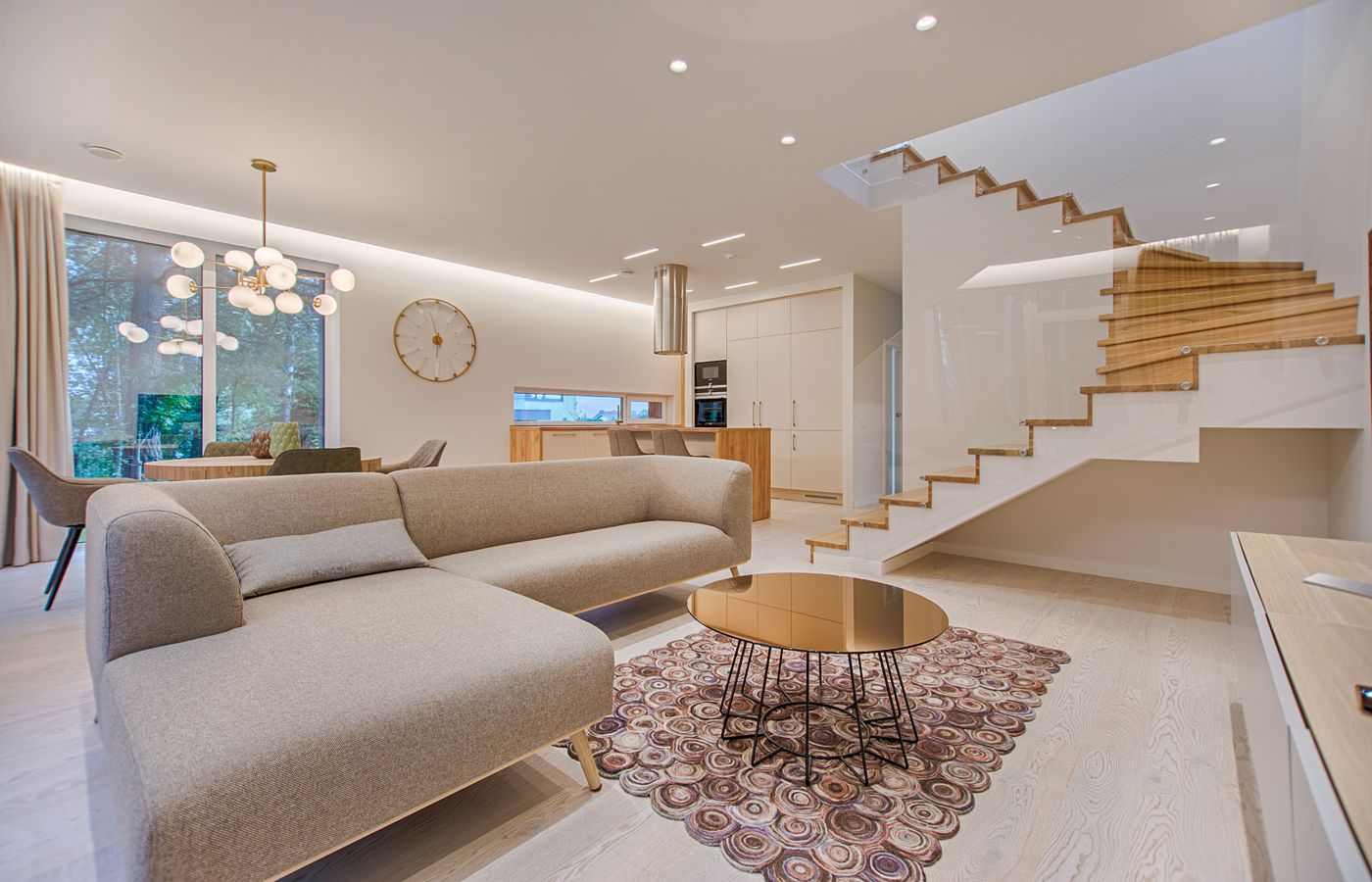
My ritual is simple. When the beam reaches the sofa cushions, I stand, walk to the window, and draw the curtain to its midpoint. Not fully closed — that would make the room too dark too early. Halfway, which allows a band of softened light to remain while blocking the direct beam that would otherwise fade the fabric over time.
I started doing this three years ago when I noticed a patch of the sofa had lightened compared to the rest. Singapore sun is relentless in its cumulative effect. The curtain is a practical intervention dressed in the language of ritual because I perform it at the same time each day and because it marks the transition from afternoon to evening in a way the clock alone does not.
On the nineteenth of June I was reading when the beam arrived. I felt it before I saw it — a warmth on my forearm, the way you feel a fireplace before you turn toward it. I marked my page, stood, and drew the curtain. The room shifted from sharp to soft in the time it takes to pull fabric along a rod.
There is something about this daily act that satisfies a need I cannot fully articulate. It is not religious. It is not superstitious. It is the satisfaction of responding to a natural event with a proportionate gesture — the sun moves, I move the curtain, the room finds its evening balance.
In December the beam will not arrive at six because the sun's angle will have shifted. The ritual will hibernate for five months and return in late April when the geometry of the blocks and the season align again. I look forward to that return without naming it as anything more than what it is: a beam of light crossing a room, and a person who has learned to meet it.
My neighbour across the corridor has a different ritual — she waters her plants at seven. We perform our evening acts independently, separated by a wall, connected by the same sun that governs both schedules. The city is full of such private synchronisations if you know where to look.